Choosing the Right Picnic Blanket: Materials, Methods and Practical Trade-offs
Problem
Choosing a picnic blanket seems simple until you encounter damp grass, sand that won’t shake out, a chilly breeze, or a bulky roll that won’t fit your daypack. Blankets must balance comfort, weather protection, portability and durability, and no single material excels at everything. Understanding the practical trade-offs between materials and packing methods helps you select the best blanket for specific outings rather than one that’s “good enough” for none.
Principles
Approach selection with these guiding principles in mind: what surface you’ll use it on, how you’ll carry it, how often you’ll wash it, and what level of comfort or insulation you need. Below are the common materials and construction choices, with neutral trade-offs for each.
Materials and construction
- Cotton: Soft, breathable and comfortable for seated meals. Pros: pleasant feel, machine-washable, folds compactly. Cons: absorbs moisture, slow to dry, not ideal on damp terrain without a waterproof layer.
- Wool: Naturally insulating and resilient, wool resists light moisture and stays warm when damp. Pros: good for cool weather and uneven ground. Cons: heavier, needs more careful washing, can be bulky.
- Fleece: Lightweight, warm, and quick-drying. Pros: soft and insulating, good as a top layer. Cons: sheds, can cling to sandy surfaces, usually needs a waterproof backing to block ground moisture.
- Coated polyester / PU-backed fabrics: Synthetic top with a waterproof or water-resistant underside. Pros: excellent moisture barrier, easy to wipe clean, lightweight options exist. Cons: can be less breathable and may feel plasticky; coatings wear over time.
- Ripstop nylon / technical fabrics: Very lightweight and packable, often used for backpacking. Pros: small packed size, durable against tears. Cons: thin and less comfortable without a cushioning layer; often noisy when moved on.
- Foam or insulated cores: Some blankets include a closed-cell foam or reflective layer for insulation. Pros: great for chilly or damp surfaces and for picnics where you’ll sit for a long time. Cons: adds thickness and can be harder to fold compactly.
Design details that matter
- Size and shape: a larger blanket offers flexibility but adds weight. Rectangular shapes suit family meals, squares are fine for two.
- Edge binding and seams: reinforced edges resist fraying; sealed seams help waterproofing last longer.
- Fastenings and straps: built-in straps, snaps, or a roll-and-clip system simplify packing and storage.
- Careability: machine-washable textiles reduce hassle; coated fabrics usually need surface cleaning only.
Examples
Below are three common use-cases with recommended materials and methods, explaining trade-offs so you can choose what matters most.
1. Family beach picnic
- Recommended: large coated polyester top with a waterproof backing, or a cotton top backed by thin foam.
- Why: sand-friendly and quick to shake off; waterproof backing keeps damp sand and tide spray out. Coated fabrics are easy to wipe clean after sandy meals.
- Trade-offs: less breathable and can feel warmer if sun-exposed. Cotton tops are more comfortable but require more shaking and washing.
2. Solo walk to a meadow or forest
- Recommended: small ripstop nylon or lightweight fleece with a compact foam pad or reflective insulation layer.
- Why: minimal pack footprint yet still offering a dry, warm sit surface when combined with a thin insulating layer.
- Trade-offs: thin fabrics can be noisy and less comfortable without added padding. Choose a slightly insulated option if you expect cooler ground.
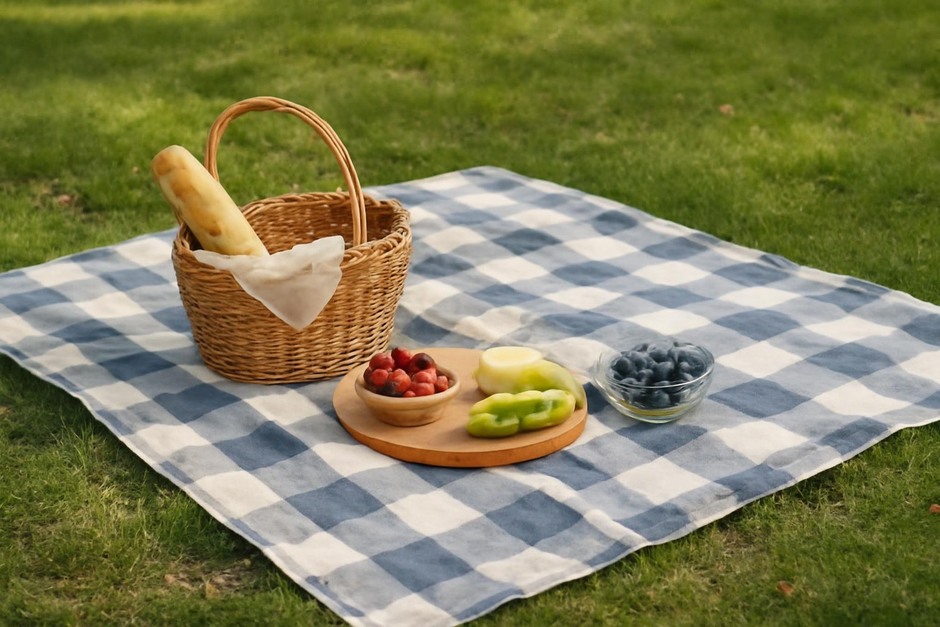
3. Urban park lunch
- Recommended: medium-sized cotton or wool blanket with foldable care and a carry strap.
- Why: comfortable for sitting on benches or lawns, machine-washable, and pleasant against picnic foods and glassware.
- Trade-offs: cotton soaks up morning dew; wool is heavier but stays warm. If dampness is likely, add a thin waterproof liner or choose a coated option.
Practice Checklist
- Define the typical scenario: beach, meadow, city park, or backpack hike.
- Choose the primary material for that scenario (comfort vs. moisture barrier vs. packability).
- Decide on size: leave extra room for food and movement, but balance weight for carrying method.
- Check construction: reinforced edges, sealed seams, and a cleanable surface extend lifespan.
- Plan carrying method: fold-and-strap for quick outings, stuffable pockets for packs, or roll-and-clip for car picnics.
- Maintain it: shake sand and crumbs outdoors, spot-clean coatings, and machine-wash textiles per care label.
- Keep an emergency liner: a small waterproof sheet tucked into the carry strap solves unexpected damp or sandy conditions.
By matching material strengths to your usual picnic conditions—and accepting the trade-offs—you’ll end up with a blanket that feels intentional rather than a compromise. Small extras like edge binding, a carry strap, or a thin insulating layer often make the biggest practical difference.