Six Short Experiments to Sharpen Your Walk Photography
Photography on a walk needn’t be intimidating. With a handful of tiny, repeatable experiments you can build an eye for light, composition, and story so that your photos feel calm, clear, and meaningful. Each exercise below takes 10–30 minutes and uses everyday tools: a phone or simple camera, a small notebook or the notes app, and a willingness to slow down a little.
Experiment 1 — Four-Minute Light Study
Goal: Notice how light changes the same scene.
- Find a single spot—a bench, a lamppost, or a tree trunk—on a short walk.
- Set a timer for four minutes. Every minute, take one photo of the same subject from roughly the same place.
- In your notes, jot one word per image describing the light: soft, backlit, high-contrast, warm, cool.
Why it helps: You learn to read light quickly and to prefer moments that suit the mood you want to convey.
Experiment 2 — Three-Frame Composition Drill
Goal: Practice composing with simple rules without overthinking.
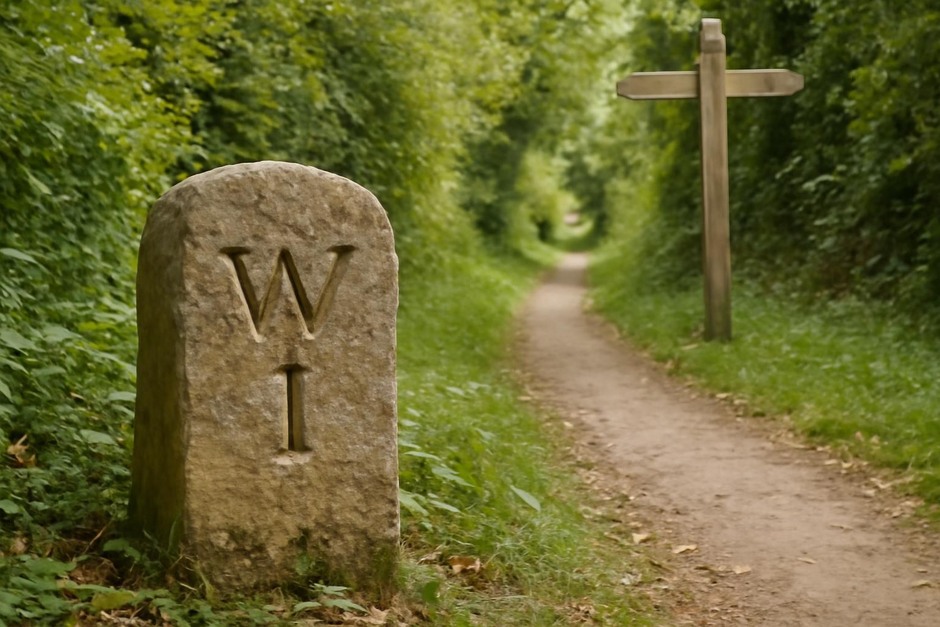
- Choose a short path where you can stop often. Take three photos, each using one composition approach: 1) centered subject, 2) rule-of-thirds subject, 3) leading lines to the subject.
- Compare them side by side and note which feels strongest and why: balance, tension, or movement.
Why it helps: Limiting options trains you to recognize the compositional choices that suit different scenes.
Experiment 3 — Tiny Details, Big Stories
Goal: Find a detail that suggests a larger place or season.
- Spend 15 minutes collecting five close-up shots of small things: a leaf edge, a cracked pot, a doorstep shadow, a puddle ripple, a berry.
- Give each image a one-line caption that places it in a season, time of day, or memory.
Why it helps: Details create intimacy and help you tell longer stories with fewer images.
Experiment 4 — Color and Texture Walk
Goal: Train your eye to notice harmonious or contrasting colors and surfaces.
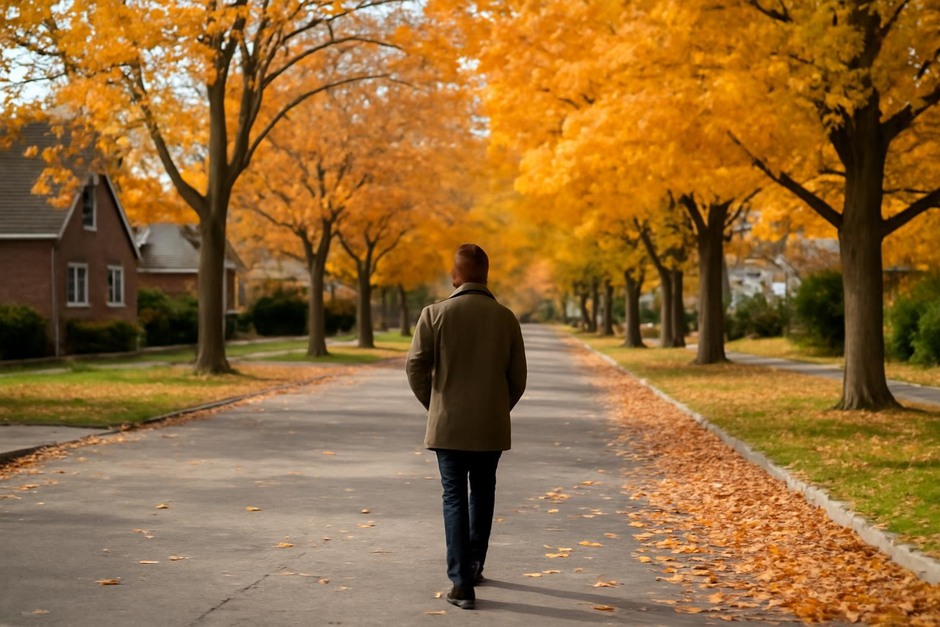
- Pick a color or texture before you step out—say, rusty orange or smooth stone.
- Spend 20 minutes photographing three examples of that color or texture in different contexts (natural, built, human-made).
- Optional: try a second pass where you deliberately capture a contrasting color near your chosen hue.
Why it helps: You start composing with mood and palette in mind, which makes images feel more cohesive.
Experiment 5 — A Five-Photo Story
Goal: Make a short narrative sequence from a single walk.
- Decide on a simple story structure: beginning (setting), middle (detail/action), end (resolution or quiet).
- Take five images that map to that structure: open with a wide shot, follow with two or three detail/action frames, close with a reflective image.
- Choose a title for the story and write a one-sentence description.
Why it helps: Storytelling turns random snapshots into a remembered experience and teaches sequencing and pacing.
Experiment 6 — The Curated Edit
Goal: Learn to choose the strongest images from a set.
- From any one walk where you did at least two experiments, select 15–20 images. Now reduce them to your best five, then your best two.
- Be ruthless: delete duplicates and images that don’t communicate mood, story, or clarity.
- For the final two, write a short note on why each image survived the cut.
Why it helps: Selection is the final creative act. Choosing fewer, stronger images is often more satisfying than many forgettable ones.
Putting the experiments together
Practice these experiments over several walks in different seasons and at different times of day. Repeat the light study in winter and summer, redo the color walk after a rain, and try the five-photo story in your neighborhood and in a park. Keep a simple folder or album where you add your best pairs from the Curated Edit. Over weeks, you’ll notice patterns in what you prefer and how your eye changes.
These exercises are small and flexible—do one on a weekday lunch break or combine two on a longer weekend stroll. The point is steady, gentle practice: each short experiment trains one part of the photographic process so that, together, they build a dependable, personal approach to capturing walks that feel like your own.